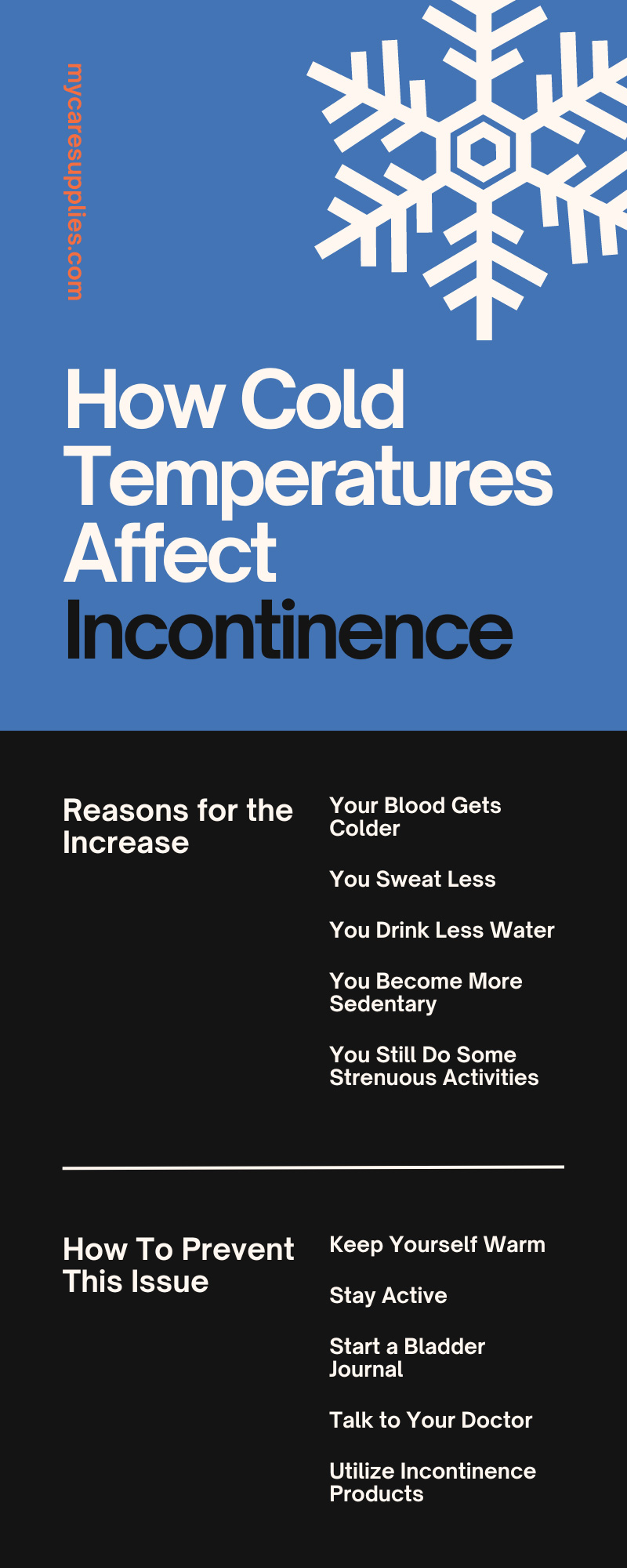

How Cold Temperatures Affect Incontinence
Posted by Jeanne Lowry on Dec 17th 2025
How Cold Temperatures Affect Incontinence
Posted by Jeanne Lowry on Jan 25th 2023
Urinary incontinence is a problem that can affect nearly anybody. It’s most common in those who are aging and women during or after pregnancy. However, those who have nerve damage, take certain medications, or have general prostate issues might also experience it.
Incontinence isn’t a consistent problem either. Sometimes, it rarely happens, while other times, it occurs much more frequently. There are many reasons why urinary incontinence irregularity arises in people, but many who deal with it have noticed that incontinence seems to get worse in the winter.
While there haven’t been any extensive studies that have proven this to be the case, there are some potential factors that could lead to this being accurate. In this post, we’ll go over what these underlying causes could be, so you can better understand how cold temperatures can affect your incontinence.
Factors Behind Cold Temperatures Incontinence
Although comprehensive studies are limited, healthcare professionals have identified several possible causes for the rise in urination frequency during colder months. Here are the key factors to consider for maintaining bladder health during cold seasons.
Colder Blood Temperatures
Regardless of your location, the winter season brings cooler temperatures that your body isn't accustomed to for most of the year. This can trigger cold-induced diuresis as a protective measure against hypothermia. While typically occurring in extreme cold, your body may restrict blood flow at any sign of risk to vital organs.
Though this instinctive response is crucial for those in severe conditions, it can be inconvenient for others. The restricted blood flow increases the workload on your kidneys, resulting in more frequent urination.
Reduced Sweating
Additionally, people sweat less during winter due to the cooler temperatures. Sweat production is largely limited to periods of physical activity. Without regular sweating, your body resorts to urination as the primary method for expelling excess water, affecting bladder health during cold seasons.
Cold Weather Urinary Incontinence
Moreover, some individuals may experience cold weather urinary incontinence, where the cold triggers involuntary bladder contractions leading to unexpected urine leakage. This is more common in those already prone to urinary issues.
You Drink Less Water
One thing many people do when it’s hot outside is sip on cold drinks to stay cool. Most of the time, that drink is water. However, when the weather starts to cool down, the need to stay hydrated also decreases. This leads to people drinking less water in general.
While this might sound like a good thing for those who experience incontinence, it can be more harmful than many people realize because dehydration could lead to a urinary tract infection (UTI). These aren’t pleasant to deal with and can increase the urge to go to the bathroom.
You Become More Sedentary
An unfortunate part of colder weather is that it tends to make people more sedentary. Being cold makes people want to cuddle up with some blankets rather than go out and do something. Even if you have the inspiration to go to the gym, bad weather could keep you from being able to make it.
While being sedentary can worsen some of the previous reasons we mentioned, this behavior can also negatively impact your food choices. Heavier meals and junk food can increase the amount of calcium your body takes in, putting additional strain on your kidneys.
You Still Do Some Strenuous Activities
Even though this time of year increases the number of people adopting a sedentary lifestyle, there are still some strenuous activities that winter brings with it. Shoveling snow off your driveway is the biggest culprit, but even fun activities like playing with your kids in the snow can be more difficult than it would seem.
While these activities are great for keeping you active, they will create more creatine and lactic acid in your body, which your kidneys will have to filter out. Once they do, you will need to urinate to remove that waste from your body.
How To Prevent Incontinence In Cold Weather Issue
Now that you’ve seen the potential reasons cold temperatures could negatively affect your incontinence, you can understand why we need to do more research on the subject. However, until that happens, you need to deal with the increase in urination winter brings with it. Here are some tips that should help you out with cold weather urinary incontinence.
Keep Yourself Warm
The number one thing you should do is keep yourself warm. If your body is at a comfortable temperature, this will help you fight against most of the issues we went over. The key way to do it is to use your heat liberally.
Defaulting to bundling up indoors and using blankets can make you more sedentary. If the heat is high enough in your home to allow you to move around freely, you’ll be more inclined to do more activities.
Stay Active
Speaking of which, the next thing you should be sure to do in the winter is to stay active. Try to make a habit of going to the gym a certain number of times each week. If the weather is bad, don’t use it as an excuse to do nothing. Find ways to work out at home instead. Just try to avoid doing too many strenuous activities outside since that will put additional strain on your body.
Start a Bladder Journal
Consider initiating a bladder journal to monitor your urinary habits. This journal will help you track the frequency of your bathroom visits throughout the day. Often, the perception of frequent urination may not align with reality unless documented.
Beyond just noting the frequency, documenting the foods consumed and activities engaged in can help identify potential triggers for your increased incontinence. Cold weather can also affect bladder control, so make note of any changes during colder months.
Consult Your Doctor
Should your symptoms persist or worsen, it is advisable to schedule a consultation with your healthcare provider. They can offer a tailored approach based on your specific symptoms, which might include lifestyle modifications or medication. Always prioritize your doctor's advice over general suggestions found online.
Consider Incontinence Products for Cold Weather Urinary Incontinence
Do not hesitate to use incontinence products if necessary. Many individuals avoid these products due to societal stigma, but addressing your incontinence is important for your comfort and confidence. Modern incontinence products are designed to be discreet, ensuring you can wear them without concern for public perception. There are extra discreet and light options like guards and pads for cold temperatures incontinence.
For those apprehensive about purchasing incontinence supplies in-store, My Care Supplies offers a convenient solution. We deliver incontinence care supplies, such as adult briefs or adult pull-ups, directly to your home.